

f you’ve been treating melasma for months (or years) and it keeps returning, you’re not doing anything wrong. Melasma is one of the most persistent forms of pigmentation in dermatology, and current research shows it behaves less like a simple pigment problem and more like a chronic, whole-skin condition. Understanding why it’s so stubborn is the first step to managing it realistically.
What Is Melasma, Exactly?
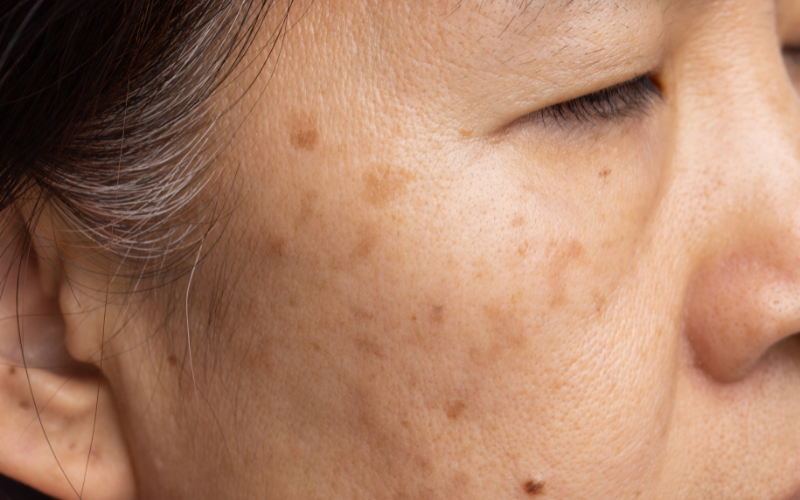
Melasma is a chronic form of facial hyperpigmentation that shows up as brown or grey-brown patches, most often on the cheeks, forehead, upper lip, and jawline. It’s far more common in women and in people with more melanin-rich skin, including much of Singapore’s population. Unlike a suntan or a single dark spot, melasma tends to wax and wane over years, often flaring with sun exposure, heat, hormonal changes, or even visible light from screens and indoor lighting.
Why Melasma Is So Hard to Treat
1. It’s not just about melanocytes
For a long time, melasma was treated as a simple case of overactive pigment-producing cells (melanocytes). Newer research paints a more complicated picture. Dermatology reviews now describe melasma as a disorder involving crosstalk between the epidermis (top skin layer) and the dermis (deeper skin layer), with input from blood vessels, immune cells, and aging skin structures — not melanocytes acting alone.
2. There’s a vascular component, not just a pigment one
Studies have identified increased blood vessel activity (angiogenesis) in melasma-affected skin. This vascular component helps explain why treatments that only target pigment — without addressing the underlying inflammation and blood supply feeding it — often produce incomplete or short-lived results.
3. Multiple skin structures are involved at once
Research has pointed to a combination of factors working together in melasma-prone skin: heightened mast cell activity, sun-damaged collagen (solar elastosis), aging fibroblasts, and melanocytes that sit lower and more active than in unaffected skin. Because so many mechanisms overlap, a treatment that addresses only one piece of the puzzle rarely resolves the whole picture.
4. Triggers are everywhere and hard to fully avoid
UV rays are only part of the story. Visible light (including from the sun and, to a lesser extent, screens) and heat can also stimulate pigment-producing pathways in melasma-prone skin. Hormonal shifts — pregnancy, contraception, thyroid conditions — add another layer that’s not always in a person’s control.
5. It’s a relapsing condition, not a one-time fix
Because melasma is driven by an underlying tendency in the skin rather than a single, removable cause, it tends to recur once treatment stops or sun protection lapses. This is why dermatology literature increasingly frames melasma as a condition to be managed long-term, rather than cured outright.
What the Science Says Your Skin Actually Needs
Given how multifactorial melasma is, current evidence supports a layered approach rather than any single product or procedure.
Photoprotection that covers more than UV. Because visible light and UVA1 both play a role in melasma, research supports broad-spectrum sunscreens — and specifically tinted, iron-oxide-containing formulas — as these are better able to filter visible light than untinted sunscreens alone. Daily, consistent use matters more than the specific brand.
Skin barrier support. A compromised skin barrier can worsen inflammation and pigment response. Gentle, non-stripping skincare and avoiding over-exfoliation is part of a sustainable routine, especially since many melasma treatments (topical or in-clinic) can be irritating on their own.
Evidence-based topical agents. Ingredients such as tranexamic acid, azelaic acid, and niacinamide have published evidence supporting their role in melasma management, often used in combination rather than alone. Some prescription-strength topical combinations require a doctor’s supervision due to their potency and potential side effects.
Oral tranexamic acid, when appropriate. For more resistant or extensive melasma, oral tranexamic acid has been studied as an adjunct therapy, working on the vascular and inflammatory pathways rather than pigment alone. It’s a prescription medicine with contraindications (such as clotting risk), so it requires proper medical assessment and is not suitable for everyone.
Targeted energy-based devices, used carefully. Certain laser and light-based treatments have been studied specifically for melasma in Asian skin types, most notably low-fluence Q-switched Nd:YAG lasers — the technology behind treatments often marketed as “Digital Peel” or laser toning.
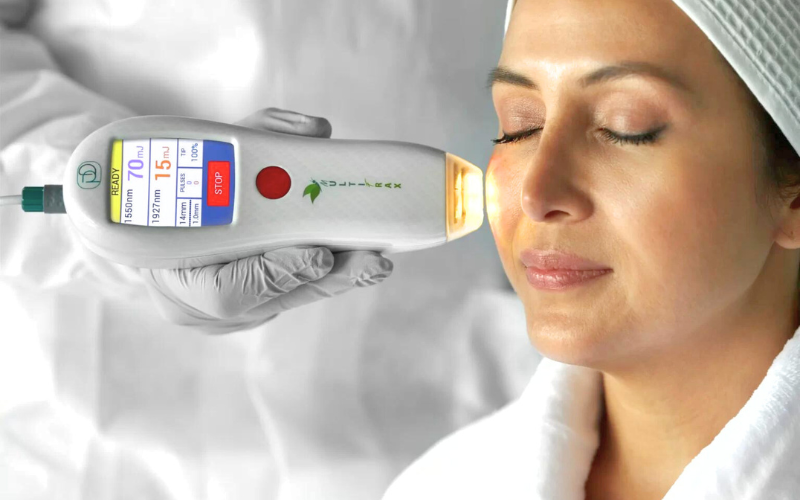
Digital Peel works by delivering a 1064 nm Q-switched Nd:YAG laser wavelength that lies within melanin’s absorption spectrum, at a low, sub-thermolytic fluence. Published research describes this as a photoacoustic mechanism: the energy is tuned to fragment clumped pigment into smaller particles the body can clear naturally, rather than deliberately destroying the melanocytes producing it or heating the skin enough to risk rebound pigmentation. This selectivity is part of why the approach has been studied specifically for melasma, where being too aggressive on pigment-producing cells can backfire and worsen discolouration.
Studies on this low-fluence approach report meaningful improvement in melasma over a course of sessions, generally with minimal downtime compared to more ablative resurfacing. That evidence also consistently frames it as one part of a larger plan: results tend to be better and more stable when laser toning is combined with oral or topical tranexamic acid and strict sun protection, rather than used as a standalone fix. Melasma-prone skin can still respond unpredictably to any energy-based device, so fluence, session intervals, and total session count need to be judged by a suitably trained practitioner based on your skin type and how your pigmentation responds, rather than a fixed protocol applied to everyone.
Consistency and realistic expectations. Because melasma is a long-term, relapsing condition, the research consistently points to maintenance — ongoing sun protection, gentle skincare, and periodic reassessment — rather than a single procedure that “finishes” the job.
What This Means If You’re Trying to Manage Melasma
Melasma responds best to a plan that’s built around your specific skin, triggers, and history, reviewed and adjusted over time by a qualified practitioner. No two cases behave identically, and what works well for one person’s melasma may not suit another’s, particularly given differences in skin type, hormonal factors, and past treatment history.
If you’d like your melasma properly assessed, our clinicians at HealthSprings Laser & Aesthetic Clinic can talk you through what’s driving your pigmentation and what a suitable, evidence-based management plan could look like for your skin. As with any medical or aesthetic treatment, individual results vary and should be discussed with a qualified doctor before starting.