

Summary:
- Facial skin loses firmness due to structural changes beneath the surface: collagen decline, shifting fat compartments, weakening ligaments, and bone resorption.
- UV radiation is the most controllable accelerant of skin ageing; daily SPF is one of the most impactful preventive habits.
- Skincare cannot reach the dermis where collagen is produced. Retinoids, vitamin C, and sunscreen slow further damage but cannot reverse structural laxity.
- Non-surgical skin tightening treatments in Singapore such as Ultherapy Prime target the structural layer of the face, with clinical studies showing results maintained for up to one year in many patients.
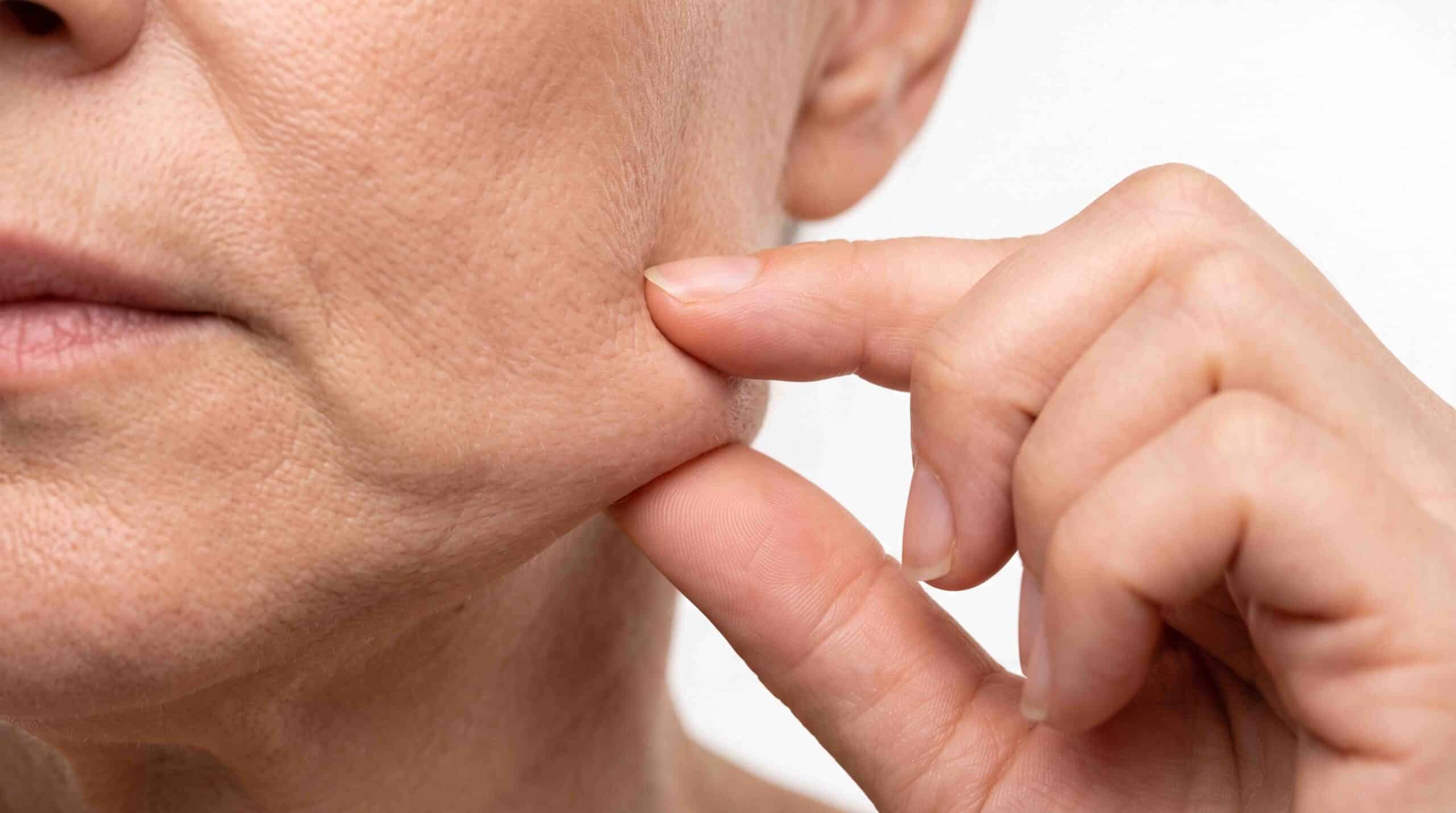
If you have been investing in skincare and not seeing the results you expected, it may not be because the products are wrong. It may be because the problem you are trying to solve cannot be reached from the outside.
What you see at the surface is the end result of changes happening much deeper: in the proteins that give skin its structure, the fat that gives it volume, the ligaments that hold everything in place, and the bones the overlying tissue rests on.
Once you understand what is driving these changes, your options become clearer and your decisions better informed.
The Science Behind Firm, Youthful-Looking Skin
Skin firmness comes from structural proteins, hydration, and the fatty tissue beneath the skin's surface.
The two proteins that matter most are collagen and elastin.
- Collagen provides tensile strength, giving skin its resistance to stretching and its ability to hold its shape.
- Elastin allows the skin to flex and return to its original position.
Together, they form the scaffolding that keeps skin looking plump, smooth, and taut.
Beneath the skin, subcutaneous fat (the fatty tissue layer beneath the dermis) provides volume and cushioning. The dermis also holds significant amounts of hyaluronic acid (a naturally occurring molecule that retains water), which keeps skin hydrated and visibly full.
When any of these components begin to break down, the result is skin that looks less firm, less supported, and less elastic.
Why Does Your Skin Lose Collagen as You Age?
Collagen production peaks in your mid-twenties and then declines gradually. Research indicates a rate of roughly one per cent per year, though this varies between individuals, and the cumulative loss becomes significant by your forties. Elastin follows a similar pattern.
As elastin fibres degrade and are not replaced at the same rate, the skin loses its ability to recoil. This is why skin that once bounced back after being pinched or stretched may now move more slowly or not return fully.
The loss of collagen and elastin is the central driver of facial skin laxity (looseness or sagging). Everything else, including sun exposure, lifestyle, and weight changes, either accelerates this process or compounds its visible effects.
Why Does the Jawline Soften with Age?
A sharp jawline relies on firm skin, evenly distributed subcutaneous fat, and ligaments (the fibrous connective tissue that anchors skin and soft tissue to bone) strong enough to hold everything in place.
With age, the skin's ability to cling tightly to the jaw diminishes, the ligaments weaken, and tissue migrates downward under gravity, blurring the distinction between jaw and neck in what is commonly referred to as jowling.
Bone density in the face also decreases with age in a specific and predictable pattern, including in the mandible (the lower jaw). This resorption reduces the bony framework the overlying tissue rests on, making the jaw appear less prominent even before significant skin laxity develops.
If the changes you’re experiencing feel more significant than normal ageing, a doctor can help. Book a consultation at Healthsprings to get a clearer picture.
What's Really Happening When the Face Starts to Sag?
The same structural processes that affect the jawline also drive changes further up the face. The midface, which includes the cheeks and the nasolabial folds (the lines running from the sides of the nose to the corners of the mouth), is particularly vulnerable to volume loss and tissue descent.
The fat compartments of the face are organised into discrete pockets, each held in position by retaining ligaments. As these ligaments weaken and the fat within each compartment diminishes and shifts downward, the result is a flatter midface, more pronounced nasolabial folds, and a loss of the rounded cheek shape associated with younger faces.
The combination of reduced volume, weakened ligaments, and less resilient skin is what produces the characteristic sagging of the lower face, and what makes patients seek a sagging face treatment.
How Much Does Sun Exposure Age Your Skin?
Factor | Mechanism | What this means for you |
UV radiation | Triggers matrix metalloproteinases (MMPs) that break down collagen and elastin in the dermis, causing photoageing | Daily SPF is one of the most impactful habits for slowing extrinsic skin ageing |
Smoking | Reduces blood flow to the skin, depletes antioxidants, and accelerates collagen degradation | Studies indicate smokers tend to show visible signs of facial ageing earlier than non-smokers |
Diet, sleep, and stress | Poor sleep, chronic stress, a diet high in refined sugars, and insufficient hydration may all increase collagen breakdown | These are modifiable factors; changes to daily habits can, in many cases, slow the progression of skin laxity |
Can Skincare Reverse Sagging Skin?
Skincare can support skin health and slow some visible signs of ageing, but is unlikely to reverse significant collagen or elastin loss on its own. Ingredients with the most robust evidence base include:
- Retinoids (derivatives of vitamin A): stimulate collagen production and accelerate cell turnover
- Vitamin C: supports collagen synthesis and offers some protection against UV-related damage
- Sunscreen: reduces further photoageing when used consistently
The key limitation of topical skincare is penetration. The skin's outer barrier is designed to keep substances out, which means even well-formulated products may not reach the depth of the dermis where collagen is produced.
Skincare is best understood as a preventive and supportive measure rather than a restorative one for significant laxity. For those whose concerns go beyond what skincare can address, a structural treatment option may be worth exploring.
Not seeing results from your skincare routine? The issue may be structural. Find out what's driving your skin concerns at Healthsprings.
When Is Ultherapy Prime Worth Considering in Singapore?
For individuals in Singapore who have noticed moderate skin laxity and are looking for a non-surgical face lift, you can consider Ultherapy Prime at Healthsprings.
Ultherapy Prime uses micro-focused ultrasound with visualisation (MFU-V) to deliver energy to the deeper layers of the skin and the superficial musculoaponeurotic system (SMAS), the fibromuscular layer beneath the skin that supports the facial structure.
The heat generated triggers the body's natural healing response, prompting new collagen and elastin production and gradually lifting and tightening the overlying skin in many patients.
Energy is delivered using real-time ultrasound imaging, following the See, Plan, Treat methodology used by Healthsprings doctors, allowing treatment to be directed to the correct depth rather than following a generic protocol.
The SMAS layer is the same layer repositioned in a surgical facelift, which is why Ultherapy Prime may be considered as a face lifting treatment for those seeking a deep-layer lift rather than surface-level improvement alone.
At Healthsprings, it is also used as a double chin treatment in Singapore, targeting submental laxity through the same approach. Your doctor will assess whether this is appropriate for your specific concerns at consultation. The treatment uses an FDA-cleared device, administered under MOH-licensed medical supervision.
Clinical studies indicate that results tend to develop over two to three months, with improvements maintained for up to one year following a session.
Ultherapy Prime may be worth discussing with a doctor if you:
- Have noticed mild to moderate skin laxity around the jawline, cheeks, brows, neck, or under the chin
- Are looking for a non-surgical option with minimal downtime
- Are open to a gradual, natural-looking improvement over two to three months
- Are considering a preventive approach to slow visible signs of ageing
It is likely to be less suitable if you have significant tissue descent better addressed surgically, are pregnant, or have an active skin infection in the treatment area. As with any treatment, outcomes vary between individuals and a consultation with a qualified doctor is essential.
When Should You See a Doctor About Skin Changes?
Most changes in facial firmness are a natural part of ageing. However, if you notice rapid or uneven changes, loss of volume that seems disproportionate to your age, or other skin changes such as persistent redness, texture changes, or unusual growths, a doctor may be able to help.
At Healthsprings Clinic, we take time to assess your skin concerns properly before recommending any course of action. If you have noticed changes in your facial firmness and would like to understand your options, including whether Ultherapy Prime may be suitable for you, we welcome you to book a consultation.